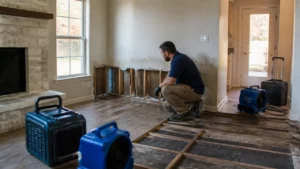
• Fast action matters after storm damage because water can hide behind walls, damage drywall, and lead to bigger repairs if left alone.
• The blog shares practical tips for spotting hidden moisture, drying affected areas, and organizing repairs the right way.
• Homeowners in Round Rock, TX can use these steps to protect their home, reduce stress, and restore indoor spaces with confidence.
Why Interior Damage Needs Fast Action
Spring storms in Round Rock can leave a home looking fine on the outside while damage builds behind the walls. When water gets inside, it can soak drywall, weaken trim, and leave behind smells that do not go away on their own. That is why interior restoration after storm damage should start as soon as possible after the weather clears.
Even small leaks can turn into bigger problems if they are ignored for too long. Moisture can spread into hidden spaces, where it can affect flooring, insulation, and other parts of the home. If you need help getting your space back on track, our team at interior restoration services can help guide the recovery process.
Homeowners often notice stains, peeling paint, or soft spots only after the storm has passed. These signs may seem minor, but they often point to damage that needs quick attention. Acting early can help protect your home, reduce stress, and make the repairs easier to manage.
How We Handle Storm Aftermath
Our first goal is to stop the damage from getting worse and check which areas need work right away. We look for visible trouble spots and also pay attention to places that may have trapped moisture out of sight. This approach helps us plan repairs that match the real condition of the home instead of just the surface damage.
From there, we remove damaged materials, dry the area, and prepare it for rebuilding. In many cases, the faster the drying process starts, the better the results for walls, floors, and other interior surfaces. When interior restoration after storm damage is handled in the right order, the home can get back to normal faster and with fewer surprises.
Tips from the Pros
🌧️ Tip 1: Check for Water Signs Right Away
Look for wet spots, ceiling stains, and warped materials as soon as it is safe to enter the home. Early signs often point to hidden moisture that can spread if left alone.
🔍 Tip 2: Smell for Musty Odors
A damp, stale smell can be one of the first clues that water got inside after a storm. Even if the room looks dry, trapped moisture may still be present behind walls or under floors.
🛠️ Tip 3: Dry the Area Fast
Remove standing water and use airflow to help dry affected spaces as soon as possible. The longer moisture sits, the greater the chance of more damage to drywall, trim, and flooring.
📋 Tip 4: Make a Damage List
Write down each affected room and the type of damage you see. This helps keep repairs organized and gives a clearer picture of what needs attention first.
🏠 Tip 5: Inspect Hidden Spaces
Check under sinks, behind furniture, and around baseboards where water can hide. Storm damage often spreads beyond the most obvious area, especially when leaks travel through materials.
🧱 Tip 6: Remove Damaged Materials Promptly
Soft drywall, soaked insulation, and swollen trim usually need to be taken out before rebuilding starts. Leaving them in place can slow down drying and raise the chance of mold growth.
⚠️ Tip 7: Watch for Mold Prone Conditions
If an area stays damp for more than a short time, mold can begin to grow on affected surfaces. Warm spring weather in Round Rock can make this happen even faster if the space is not dried well.
📞 Tip 8: Call for Help Early
Professional support can make the repair process smoother and more organized. When storm damage affects the inside of a home, quick action can help protect both the structure and your peace of mind.
Frequently Asked Questions
What is interior restoration after storm damage?
Yes, it is the process of repairing indoor areas that were damaged by water, wind, or other storm effects. It often includes drying, removing damaged materials, and rebuilding affected spaces.
How soon should storm damage inside the home be fixed?
Yes, it should be addressed as soon as possible. Waiting too long can allow moisture to spread and create more damage in walls, floors, and hidden spaces.
What are the most common signs of hidden storm damage?
Yes, common signs include stains, peeling paint, soft drywall, warping, and musty smells. These often point to water that has moved beyond the surface and into other parts of the home.
Can storm damage lead to mold inside the home?
Yes, it can if wet materials are not dried out quickly. Mold can start growing when moisture stays trapped in a warm indoor space for too long.
Why is interior restoration after storm damage important for homeowners in Round Rock?
Yes, it is important because spring storms in Round Rock can bring sudden rain and leaks that affect more than just the roof. Fast interior restoration after storm damage helps protect the home from larger repairs and long-term moisture problems.
Restoring Your Home With Confidence
Storm damage inside a home can feel overwhelming, but the right response makes a big difference. When moisture is handled early, repairs are usually cleaner, faster, and more effective. That is why staying alert after spring storms is such an important part of protecting your home in Round Rock.
We believe homeowners should know what to look for and when to act. With careful planning and the right repair steps, you can move from damage control to real recovery with less stress. To keep up with our work and company updates, follow us on Instagram.